Find the grain by comparing two bends
Use a pair of bends and a test fold from the actual stock to choose the direction of the spine in your next small book.
No stories match this search. Try another term or section.
A small folded model lets you check page direction, margins and the order a reader will encounter the work before committing the final sheets.
A tidy stitch can still pull a small booklet out of shape. Read the fold and the way it opens before making the next stitch tighter.
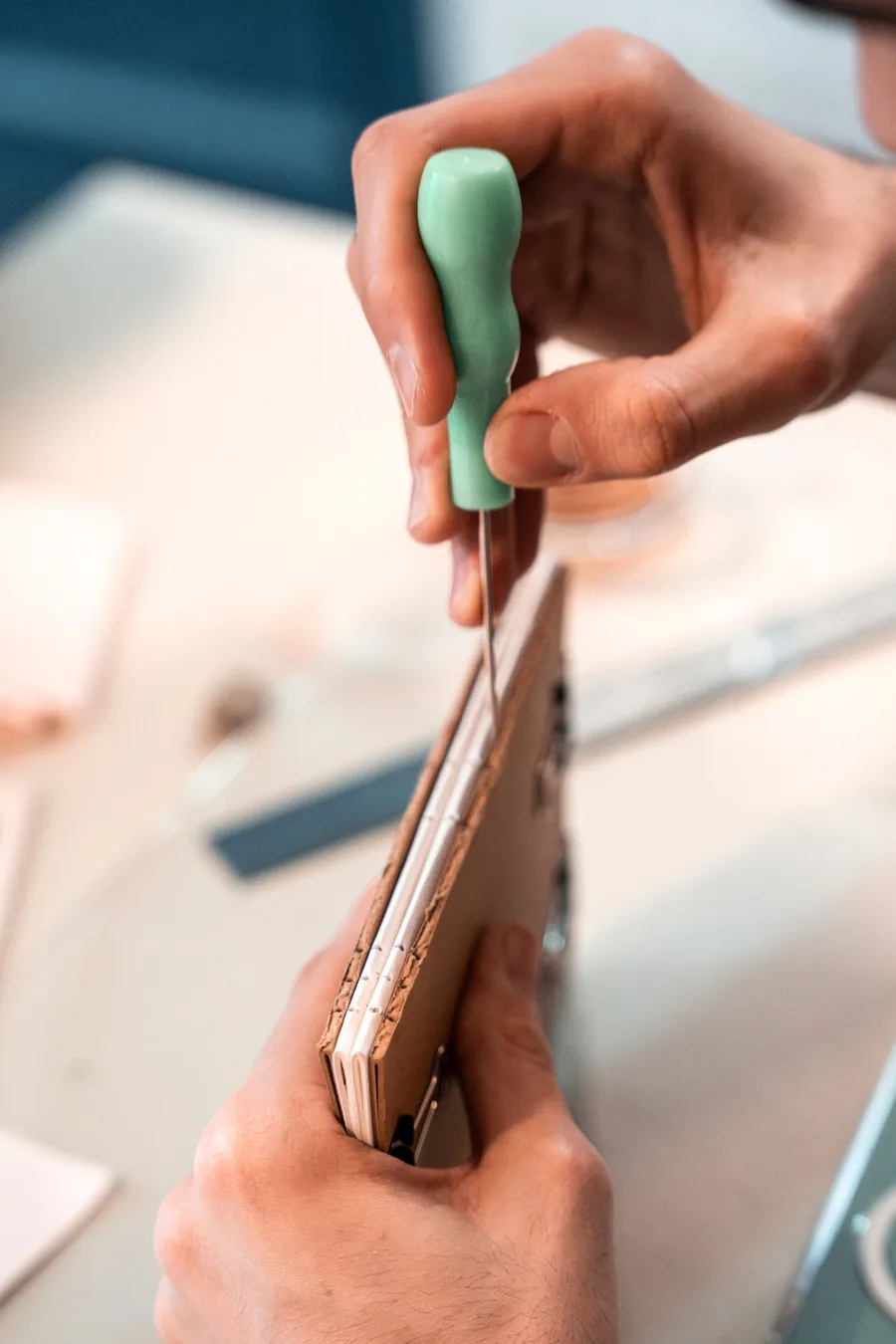
Put unfinished sheets, a partly assembled book and finished copies in separate places so they can survive an interrupted session.
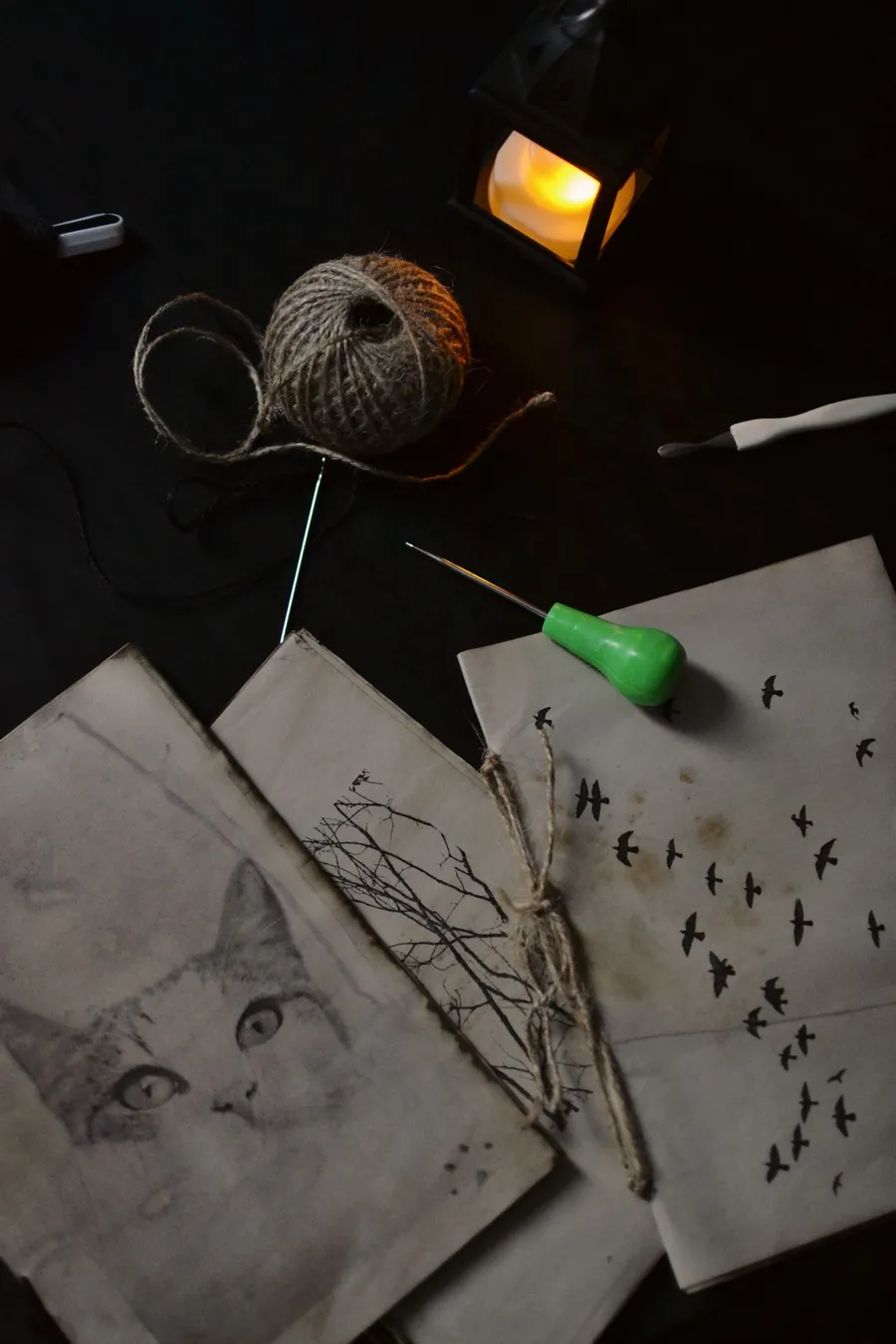
Use a pair of bends and a test fold from the actual stock to choose the direction of the spine in your next small book.
Use a sheet with ordinary handwriting to decide how close the working area of a notebook can come to its fold.
A guide made for the actual folded size keeps holes aligned so the thread lies where the booklet can support it.
Start with the real receipt, note or scrap you expect to keep. Its shape and thickness determine whether a pocket will be easy to use when the book is partly full.
Test writing, a solid patch and a page turn together. The material choice belongs to the marks and the person who will read them.
Size a folded wrapper against the real stack. The extra distance it travels around the spine can change what reaches the fore edge.
A name panel, a date line and a completely blank page prompt different kinds of use. Make the first page ready for the notebook's first ordinary task.
A card stored in a small book adds a local layer. Put the layer where readers can turn and write without the rest of the booklet having to bend around it.
An inner leaf in a folded stack can appear farther forward than its neighbors. Observe the whole nested group before choosing how much margin to leave.
A wrapper can look complete while closed and still push back when it opens. Check the strain at an ordinary spread before deciding how firm to make the fold.
Save one finished object for handling and a separate set of working pieces for decisions about paper, page direction and assembly.
When a book combines different stocks, test the boundary as carefully as the materials. Paper weight and texture can change how a leaf turns.
When a group of small books share a color and format, add an identifier you can see before opening the wrong one.
A temporary sheet can separate a sensitive surface during assembly. Set it out so that it is easy to identify and remove at the correct stage.
Say a short passage aloud while turning the actual dummy. The distance between its parts can show whether a printed page break is doing something useful.
A corner may feel—and wear—differently once a cover wraps around pages. Inspect test shapes against the real thickness and intended handling.
When each cover is an entrance, decide how the reader recognizes the direction and what happens in the middle.
A durable wrapper can serve several thin booklets if the current subject remains easy to identify and the front is still comfortable to handle.
Put an ordinary practice section next to the rest of the future book. A neat section on its own gives only part of the information a full assembly will need.
The name that helps you retrieve a book can get in the way while you use it. Inspect where it appears during handling as well as on a flat proof.