Check sewing holes with a folded guide
A guide made for the actual folded size keeps holes aligned so the thread lies where the booklet can support it.
7 stories
A tidy stitch can still pull a small booklet out of shape. Read the fold and the way it opens before making the next stitch tighter.
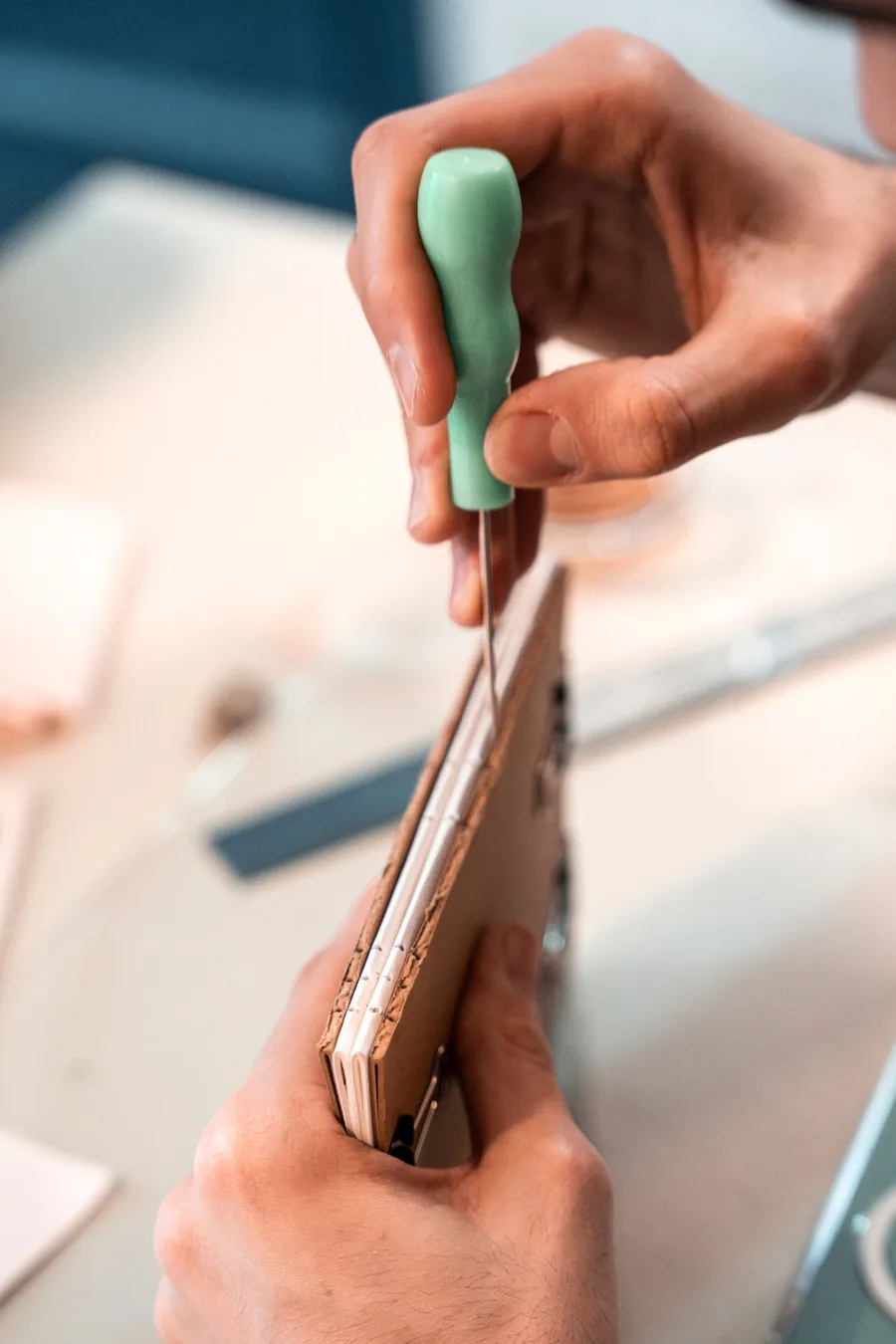
A guide made for the actual folded size keeps holes aligned so the thread lies where the booklet can support it.
Size a folded wrapper against the real stack. The extra distance it travels around the spine can change what reaches the fore edge.
A wrapper can look complete while closed and still push back when it opens. Check the strain at an ordinary spread before deciding how firm to make the fold.
A temporary sheet can separate a sensitive surface during assembly. Set it out so that it is easy to identify and remove at the correct stage.
A corner may feel—and wear—differently once a cover wraps around pages. Inspect test shapes against the real thickness and intended handling.
Put an ordinary practice section next to the rest of the future book. A neat section on its own gives only part of the information a full assembly will need.