Make a paper dummy before you fold the book
A small folded model lets you check page direction, margins and the order a reader will encounter the work before committing the final sheets.
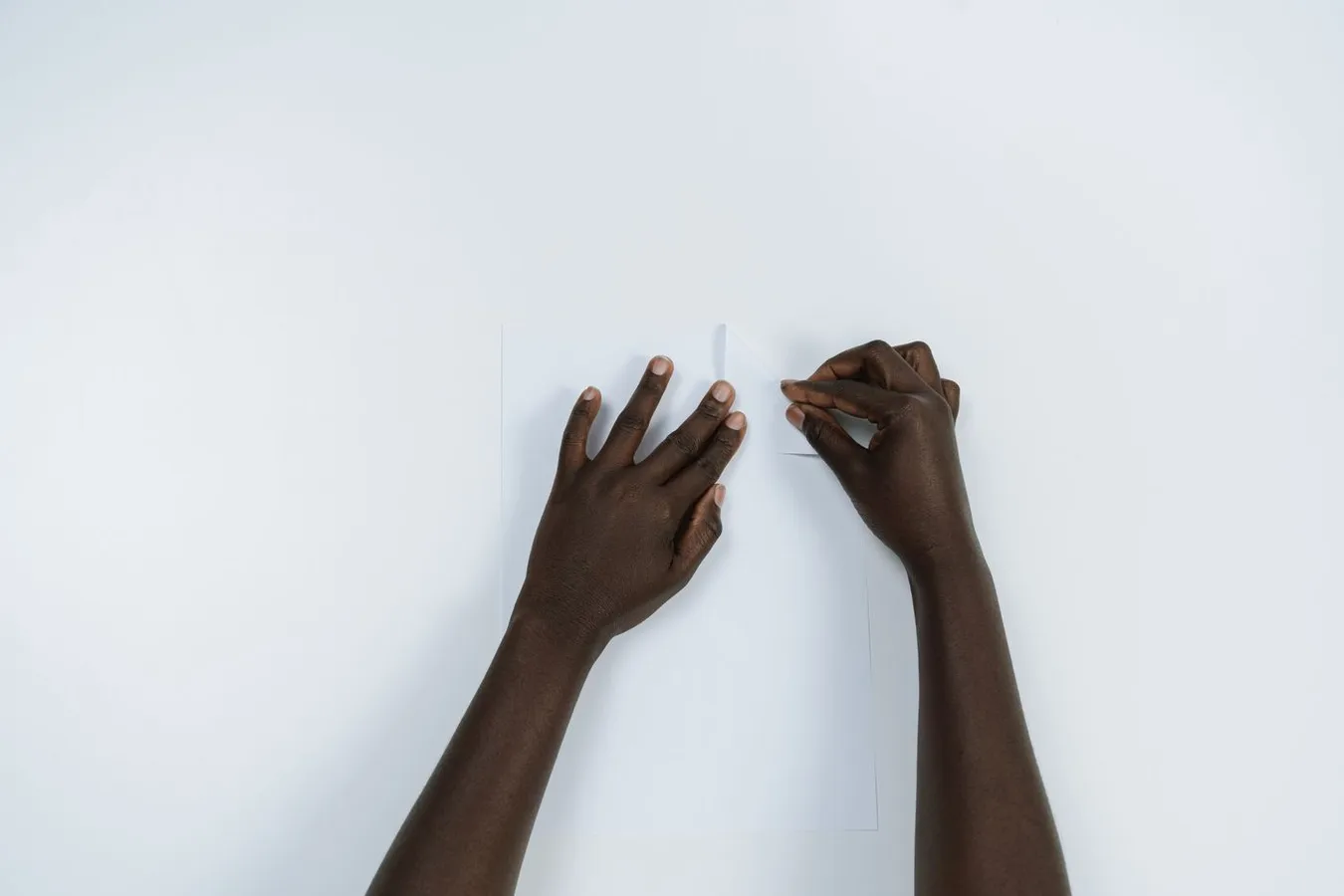
Use a pair of bends and a test fold from the actual stock to choose the direction of the spine in your next small book.
Use a sheet with ordinary handwriting to decide how close the working area of a notebook can come to its fold.
A guide made for the actual folded size keeps holes aligned so the thread lies where the booklet can support it.
Start with the real receipt, note or scrap you expect to keep. Its shape and thickness determine whether a pocket will be easy to use when the book is partly full.
A tidy stitch can still pull a small booklet out of shape. Read the fold and the way it opens before making the next stitch tighter.
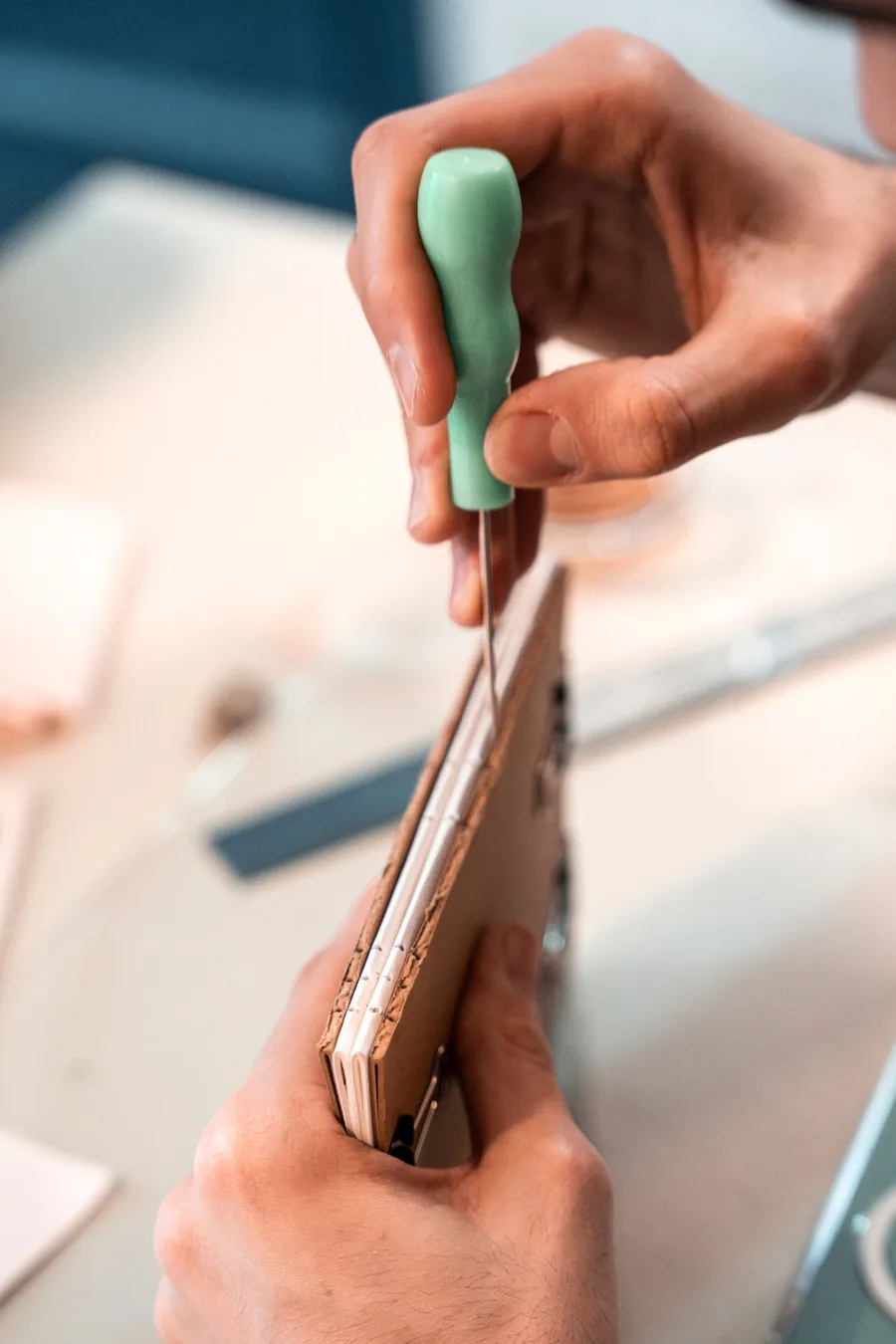
Put unfinished sheets, a partly assembled book and finished copies in separate places so they can survive an interrupted session.
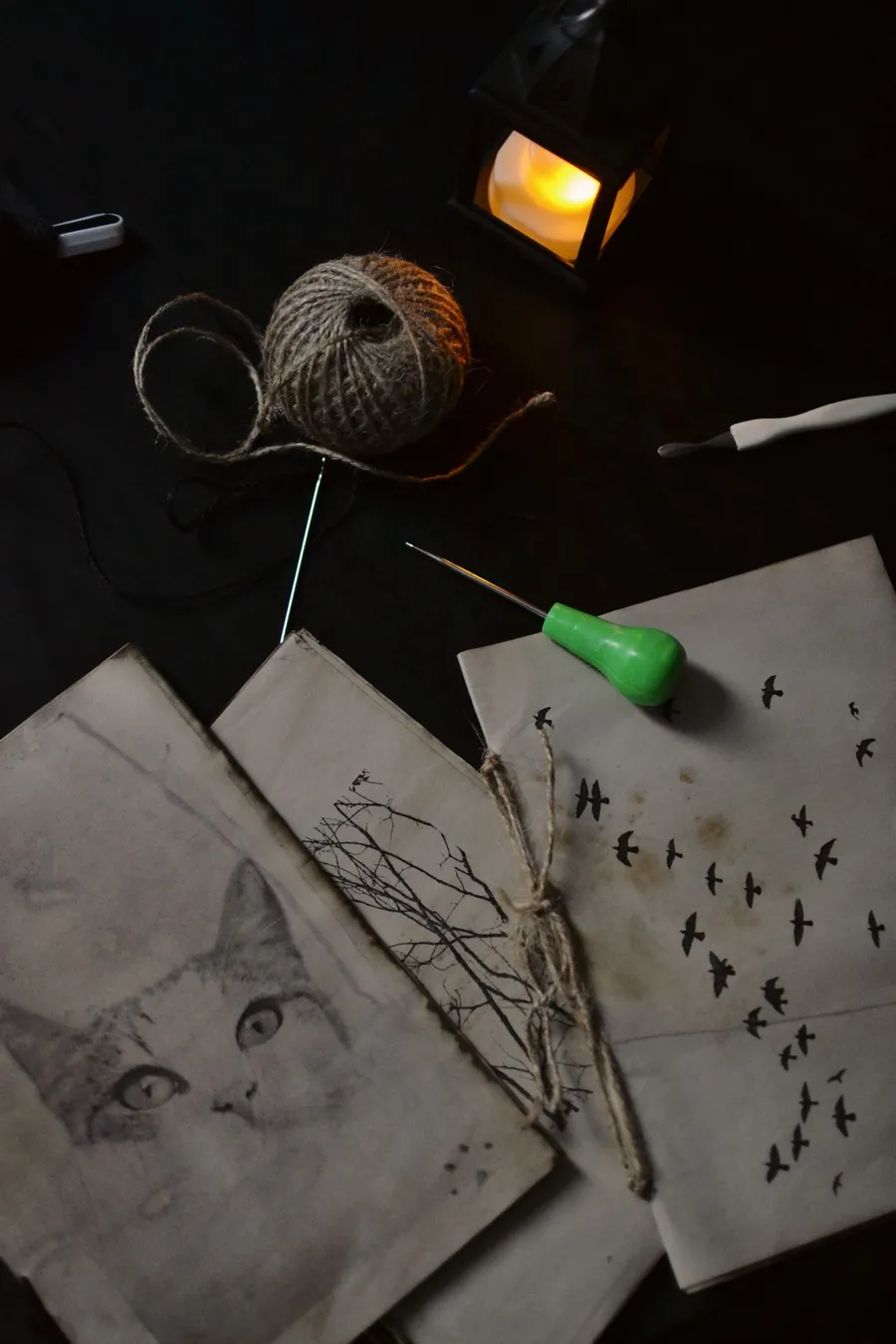
Test writing, a solid patch and a page turn together. The material choice belongs to the marks and the person who will read them.
Size a folded wrapper against the real stack. The extra distance it travels around the spine can change what reaches the fore edge.